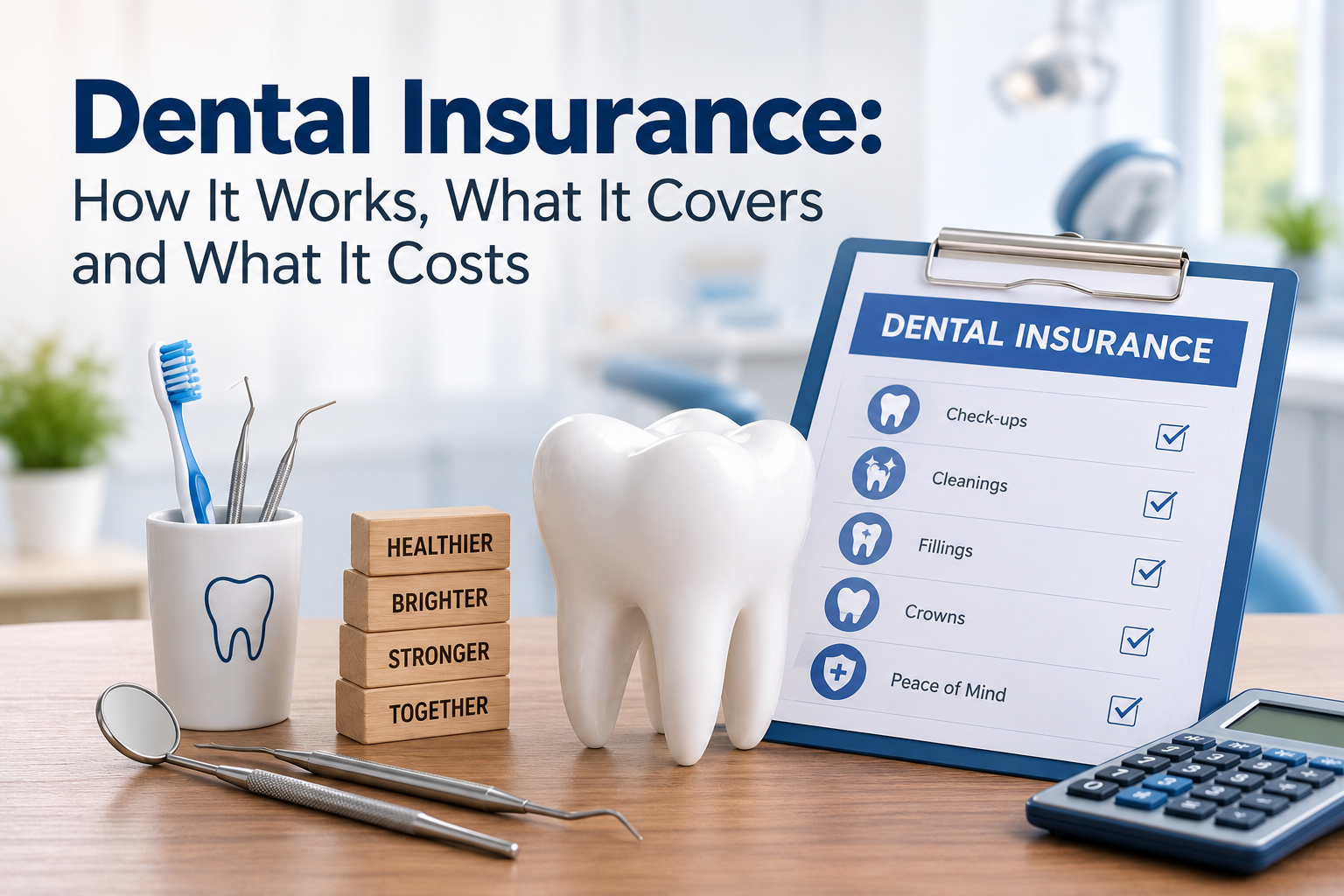
Dental insurance can help reduce the cost of preventive care and other dental treatments, but understanding what a plan actually pays for is not always straightforward. Premiums, deductibles, coinsurance, annual maximums, waiting periods, provider networks and exclusions can all affect how much you pay when you visit the dentist.
Unlike medical insurance, many dental plans are designed around routine preventive care and may have relatively low annual benefit limits. A plan may cover preventive services at a higher percentage while paying a smaller portion of more expensive restorative or major dental procedures.
Before choosing a dental insurance plan, it is important to understand how the plan works, what services are covered, what limitations apply and how much you may have to pay yourself.
What Is Dental Insurance?
Dental insurance is a type of coverage that helps pay for eligible dental services according to the terms of a specific plan.
You generally pay a premium to maintain the coverage. When you receive dental care, the plan may pay part of the allowed or covered amount, while you may be responsible for a deductible, coinsurance, copayment or other costs.
The exact arrangement varies between plans.
Some plans encourage patients to use a network of participating dentists, while others allow greater freedom to choose a dental provider. The American Dental Association identifies several common types of dental plans, including preferred provider organizations, dental health maintenance organizations, indemnity plans and direct reimbursement arrangements.
Dental insurance is therefore not a promise that the insurer will pay for every dental bill. A dental plan provides benefits according to its contract, including its covered services, limitations, exclusions and maximums.
How Does Dental Insurance Work?
The easiest way to understand dental insurance is to look at the process from enrollment to treatment.
1. You Choose a Dental Plan
You may receive dental coverage through an employer or purchase a separate dental plan, depending on your circumstances.
Some health plans include dental benefits, while separate dental plans may also be available. In the Health Insurance Marketplace, adult dental coverage may be included with some health plans or offered through a separate dental plan.
Before enrolling, compare:
- Monthly premium
- Deductible
- Coinsurance
- Copayments
- Annual maximum
- Waiting periods
- Covered services
- Exclusions
- Provider network
- Out-of-network benefits
- Orthodontic coverage
- Family maximums or individual maximums
2. You Pay Your Premium
A premium is the amount you pay to keep your dental insurance active.
Depending on the plan, premiums may be paid monthly or through an employer payroll arrangement.
The premium is not the same as your total dental costs. You may still have to pay part of the cost of dental treatment when you receive care.
3. You Visit a Dentist
When you need dental care, you visit a dentist who participates in your plan’s network if your plan uses a network.
Using an in-network dentist may reduce your out-of-pocket costs because the dentist has agreed to the plan’s contracted or negotiated fees.
Some plans also provide benefits when you visit an out-of-network dentist, although your share of the cost may be higher.
4. The Dentist Submits a Claim
After treatment, the dental office may submit a claim to the insurance company or plan administrator.
The insurer then reviews the claim against the terms of your plan.
The amount paid depends on factors such as:
- Whether the procedure is covered
- Whether you have met your deductible
- The plan’s allowed amount
- Your coinsurance
- Whether you have reached your annual maximum
- Whether a waiting period applies
- Whether the dentist is in or out of network
- Whether the treatment is subject to a limitation or exclusion
5. You Pay Your Share
After the claim is processed, you may have a remaining balance.
Your responsibility can include:
- Deductible
- Coinsurance
- Copayment
- Amount above the plan’s allowed fee
- Services excluded from the plan
- Amounts remaining after the annual maximum has been reached
Your Explanation of Benefits, or EOB, should show how the claim was processed and how much the plan paid versus what you owe. The ADA recommends reviewing the EOB carefully, including the plan allowance, coinsurance, deductible, amount paid and patient responsibility.
What Does Dental Insurance Usually Cover?
Dental insurance coverage varies by plan, so there is no universal list of services that every dental policy covers.
Many traditional dental plans divide services into broad categories such as preventive, basic and major care.
A common plan design may provide a higher percentage of coverage for preventive services and a lower percentage for major restorative treatment. The ADA gives a typical example of 100% coverage for preventive and diagnostic services, 80% for basic restorative services and 50% for major restorative services, but actual plan designs vary.
Preventive and Diagnostic Care
Preventive dental care may include services such as:
- Routine dental examinations
- Cleanings
- Dental X-rays
- Preventive treatments
- Fluoride treatment in eligible cases
- Other diagnostic services
Preventive services are often covered at a higher percentage than major procedures, although frequency limits and other restrictions may apply.
For example, a plan may limit how frequently certain examinations, cleanings or X-rays are covered.
Always check the individual plan rather than assuming that a service is covered simply because it is considered preventive.
Basic Dental Services
Basic services may include treatments such as:
- Fillings
- Simple extractions
- Certain periodontal treatments
- Other restorative procedures
The exact classification depends on the plan.
A procedure that one plan considers basic may be categorized differently by another plan.
Major Dental Services
Major dental services may include more complex procedures such as:
- Crowns
- Bridges
- Dentures
- Certain oral surgery procedures
- Some periodontal procedures
Major services are often subject to higher patient cost-sharing.
Some plans may cover only certain procedures or may apply waiting periods, frequency limitations or other restrictions.
Orthodontic Treatment
Orthodontic coverage is often separate from general dental coverage.
A plan may cover orthodontic treatment for children, adults or both, depending on the policy.
Some plans have a separate lifetime maximum for orthodontics rather than the same annual maximum used for other dental services.
The ADA’s examples of typical plan designs illustrate that orthodontic benefits can have separate coverage rules and maximums.
What Does Dental Insurance Not Cover?
Dental insurance does not necessarily cover every procedure recommended by a dentist.
Common exclusions or limitations may include:
- Cosmetic procedures
- Certain dental implants
- Certain orthodontic treatments
- Procedures excluded by the plan
- Services exceeding frequency limitations
- Treatment performed during a waiting period
- Services after the annual maximum has been reached
- Certain pre-existing conditions or missing teeth, depending on the plan
The exact exclusions depend on the policy.
For example, the ADA notes that a procedure can be recognized as a covered benefit but still receive no payment because the annual maximum has been reached, a frequency limitation has been exceeded or a waiting period is still in effect. A genuinely non-covered service, on the other hand, is excluded from the plan altogether.
This distinction is important because “not paid by insurance” does not always mean “not covered by the plan.”
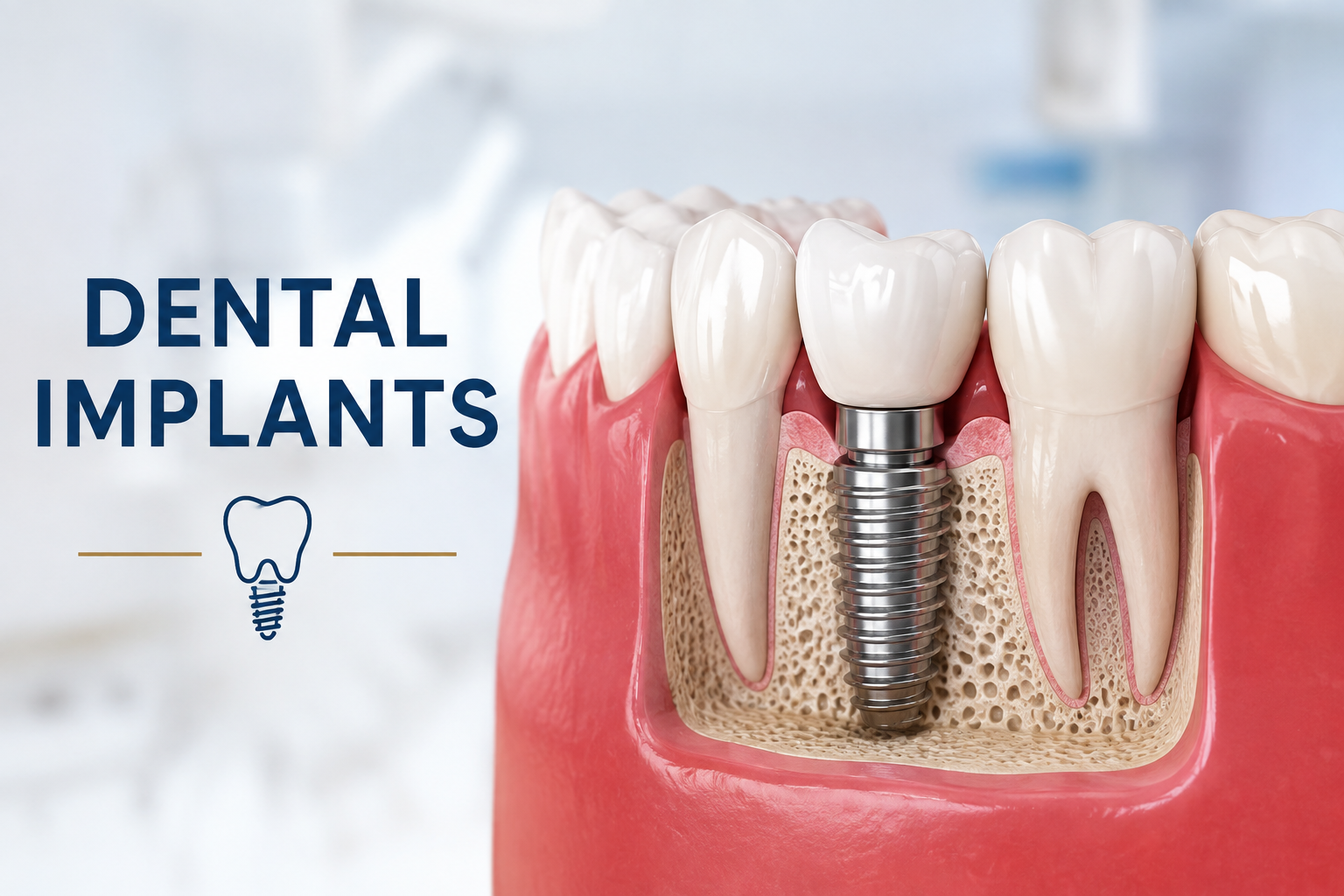
Does Dental Insurance Cover Dental Implants?
Dental implant coverage varies significantly between plans.
Some dental plans may provide benefits toward implants or parts of implant treatment, while others may exclude implants.
Even when implants are covered, the plan may have limitations on the implant itself, the crown, bone grafting or other associated procedures.
Before scheduling implant treatment, ask the insurance company or dental office to verify:
- Whether the implant is covered
- Whether the abutment is covered
- Whether the crown is covered
- Whether bone grafting is covered
- Whether a sinus lift is covered
- The percentage the plan will pay
- Your remaining annual maximum
- Any waiting period
- Any alternate-benefit provision
Do not assume that having dental insurance means your implant treatment will be covered.
Does Dental Insurance Cover Braces?
Orthodontic coverage depends on the plan.
Some policies provide orthodontic benefits, while others exclude orthodontic treatment.
Plans that cover braces may have:
- Separate deductibles
- Separate coinsurance
- Lifetime orthodontic maximums
- Age restrictions
- Waiting periods
- Treatment limitations
Before starting orthodontic treatment, ask the insurer for a written estimate of benefits when possible.
Does Dental Insurance Cover Root Canals?
Root canal treatment may be covered under some dental plans, but the percentage paid and applicable limitations vary.
The plan may classify root canal treatment as a basic or major service depending on the policy.
The cost may also include other services such as:
- Examination
- X-rays
- Root canal treatment
- Core buildup
- Crown
The insurance benefit for one part of treatment does not necessarily mean every related procedure will be covered at the same percentage.
What Is a Dental Insurance Premium?
A premium is the amount you pay for your dental insurance coverage.
For example, if your plan has a monthly premium, you pay that amount to keep the policy active.
Premiums vary depending on factors such as:
- Type of plan
- Individual versus family coverage
- Employer contribution
- Location
- Insurance company
- Benefits included
- Network structure
A lower premium does not necessarily mean the plan will cost less overall.
A plan with a low monthly premium may have a higher deductible, lower annual maximum or higher out-of-pocket costs for major treatment.
What Is a Dental Insurance Deductible?
A deductible is the amount you may need to pay for eligible services before the plan begins paying according to its benefit structure.
For example, if a plan has a $50 deductible and you receive covered treatment subject to that deductible, you may need to pay the first $50 before the plan applies its covered percentage.
Not every service necessarily applies to the deductible.
Many dental plans do not apply the deductible to certain preventive and diagnostic services. The specific rules depend on the plan.
What Is Dental Insurance Coinsurance?
Coinsurance is the portion of a covered dental expense that you are responsible for after applicable deductibles.
For example, a plan might pay 80% of an allowed covered amount while you pay the remaining 20%.
The actual calculation can be more complicated if the dentist’s fee is different from the plan’s allowed amount or if you are seeing an out-of-network dentist.
The ADA describes coinsurance as the percentage of a covered dental expense that the beneficiary must pay after the deductible has been paid.
What Is a Copayment?
A copayment, or copay, is a fixed amount that you pay for a covered service under certain dental plans.
For example, a plan may require a specific copayment for a particular service.
Not all dental insurance plans use copayments in the same way.
Always check your plan documents to understand whether a service is subject to a copay, deductible, coinsurance or another payment arrangement.
What Is an Annual Maximum?
An annual maximum is the maximum amount that a dental plan will pay toward covered dental services during a specified benefit year.
For example, if a plan has a $1,500 annual maximum, the plan generally will not pay more than $1,500 in covered benefits during that benefit year, subject to the plan’s rules.
Once the annual maximum has been reached, you may have to pay additional treatment costs yourself.
The ADA notes that annual maximums are common in dental plans and may be based on an individual or family maximum.
Annual maximums are particularly important when you need expensive dental treatment.
If you need a crown, bridge, periodontal treatment or multiple procedures during the same benefit year, you could reach the maximum quickly.
What Is a Dental Insurance Waiting Period?
A waiting period is a period of time you may have to wait after enrolling before certain dental benefits become available.
Waiting periods vary by plan.
For example, a plan may provide preventive benefits immediately while requiring a waiting period before certain major services are covered.
The Health Insurance Marketplace notes that separate dental plans may have waiting periods for adult services.
Do not assume that paying your premium means every service is immediately covered.
Check the policy for the exact waiting period before scheduling expensive treatment.
What Is an In-Network Dentist?
An in-network dentist has a contractual relationship with the dental plan or network.
The dentist generally agrees to the plan’s contracted or allowed fees for covered services.
Using an in-network dentist can reduce your out-of-pocket costs under many plans.
A PPO plan, for example, generally has a network of contracted dentists who agree to specified fees and plan provisions. Patients may also be able to use an out-of-network dentist, but the benefit may be lower.
What Is an Out-of-Network Dentist?
An out-of-network dentist does not have the same contractual relationship with your insurance plan.
Depending on your plan, you may still receive some insurance benefits when using an out-of-network dentist.
However, you may have a higher share of the cost.
The difference can come from both the insurance benefit and the dentist’s fee.
Always check whether your plan has out-of-network benefits before choosing a dentist.
Types of Dental Insurance Plans
There are several types of dental benefit plans.
PPO Dental Insurance
Preferred Provider Organization plans are among the most common types of dental plans in the United States.
A PPO provides access to a network of contracted dentists.
You can generally choose an in-network dentist or, depending on the plan, receive reduced benefits when visiting an out-of-network dentist.
Potential advantages include:
- Larger provider choice
- Access to in-network negotiated fees
- Some out-of-network coverage
- More flexibility than some network-restricted plans
Potential disadvantages may include:
- Higher premiums than some alternatives
- Deductibles
- Coinsurance
- Annual maximums
- Higher out-of-pocket costs when using out-of-network providers
DHMO Dental Insurance
Dental Health Maintenance Organization plans, often called DHMOs or capitation plans, generally require patients to use participating dentists to receive covered benefits.
The ADA explains that contracted dentists receive a predetermined payment for patients assigned to them and provide certain contracted services at no cost or a reduced cost according to the plan.
Potential advantages may include lower premiums or predictable costs.
Potential disadvantages may include a more limited provider network.
Indemnity Dental Insurance
Indemnity plans are sometimes called traditional dental insurance.
These plans generally allow patients more freedom to choose their dentist.
The insurance company pays claims according to the plan’s benefit structure, usually based on a percentage of covered charges or an allowed amount.
The trade-off can be higher premiums or more out-of-pocket responsibility depending on the plan.
How Much Does Dental Insurance Cost?
There is no single price for dental insurance.
The amount you pay depends on factors such as:
- Individual or family coverage
- Type of plan
- Location
- Insurance company
- Employer contribution
- Coverage level
- Deductible
- Annual maximum
- Network
- Orthodontic benefits
When comparing plans, do not look only at the monthly premium.
A better comparison considers the total potential annual cost.
For example:
Annual premium + expected out-of-pocket dental costs = potential annual dental spending
A low-premium plan may be attractive if you mainly need preventive care.
A plan with a higher premium may be more valuable if you expect significant dental treatment and the additional benefits outweigh the extra premium.
How Much Does Dental Care Cost Without Insurance?
Dental treatment costs vary widely depending on the procedure, dentist, location and complexity of the case.
Common services such as examinations and cleanings generally cost less than procedures such as crowns, root canals, implants or full-mouth rehabilitation.
Without insurance, the patient generally pays the dentist’s fee directly.
This is why it is useful to ask for an estimate before major treatment.
For expensive procedures, ask the dental office for an itemized estimate showing:
- Procedure
- Dentist’s fee
- Insurance estimate
- Patient responsibility
- Additional procedures
- Laboratory charges where applicable
- Payment options
How Do You Know How Much Your Dental Insurance Will Pay?
The easiest way is to check your plan documents and ask for a pre-treatment estimate or predetermination when available.
Before major treatment, ask the dental office to verify your benefits.
You should find out:
- Whether the procedure is covered
- The percentage covered
- Whether the deductible applies
- Your remaining deductible
- Your remaining annual maximum
- Whether a waiting period applies
- Whether your dentist is in network
- Whether an alternate benefit applies
- Whether the treatment requires prior authorization
Keep in mind that a benefits estimate is not always a guarantee of payment.
The final claim can depend on the information submitted and the terms of the plan.
What Is an Explanation of Benefits?
An Explanation of Benefits, commonly called an EOB, is a document showing how the insurance plan processed a dental claim.
It may show:
- Dentist’s submitted fee
- Plan allowance
- Covered percentage
- Deductible
- Amount paid by the plan
- Patient responsibility
- Remaining annual maximum
- Other claim information
The EOB is not necessarily a bill.
It explains how the insurance company calculated the benefit and what amount may remain for the patient to pay. The ADA recommends checking the information carefully.
What Is an Insurance Predetermination?
A predetermination is a request sent to the insurance company before treatment to determine how the plan is expected to process the proposed treatment.
It can be particularly useful before expensive procedures.
A predetermination may help you understand:
- Whether the treatment is covered
- The expected insurance payment
- Your estimated responsibility
- Whether additional documentation is needed
However, an estimate from an insurer should not automatically be treated as a guarantee that the final claim will be paid exactly as estimated.
Can You Have Two Dental Insurance Plans?
Some people have access to more than one dental plan, such as through their own employer and a spouse’s employer.
When someone has two plans, coordination of benefits determines how the plans work together.
The primary plan generally processes the claim first, while the secondary plan may consider remaining eligible expenses according to its own rules.
The ADA notes that coordination-of-benefits provisions can vary and may use different methods to determine the amount paid by a secondary plan.
Having two plans does not necessarily mean that every dental expense will be paid in full.
How to Choose a Dental Insurance Plan
Choosing dental insurance should be based on your expected dental needs rather than the premium alone.
1. Check the Dentist Network
If you already have a dentist you trust, check whether that dentist participates in the plan.
2. Compare Premiums
Calculate how much you will pay over a full year rather than looking only at the monthly price.
3. Check the Deductible
A lower deductible can reduce your initial cost when you need covered treatment, but it may come with a higher premium.
4. Check the Annual Maximum
A plan with a low annual maximum may provide limited financial protection when you need extensive dental treatment.
5. Look at Major Services
If you expect to need a crown, bridge, root canal, dentures or another major procedure, check how those services are classified and what percentage the plan pays.
6. Check Waiting Periods
A waiting period can make a plan less useful if you already know that you need major dental treatment soon.
7. Look for Exclusions
Read the exclusions carefully.
Pay particular attention to:
- Implants
- Orthodontics
- Cosmetic procedures
- Missing teeth
- Pre-existing conditions
- Replacement limitations
8. Check Out-of-Network Benefits
If you want flexibility in choosing a dentist, check whether the plan pays benefits outside the network.
9. Check Orthodontic Coverage
If you or your child may need braces, check whether orthodontic treatment is included and whether there is a separate maximum.
10. Calculate the Potential Total Cost
Compare:
Premium + deductible + expected coinsurance + likely uncovered costs
This provides a better picture than comparing premiums alone.
How to Save Money With Dental Insurance
There are several ways to get more value from a dental plan.
Use Preventive Benefits
If routine examinations and cleanings are covered, use them according to the schedule allowed by your plan.
Preventive care can help identify dental problems before they become more complicated.
Use In-Network Dentists
If your plan provides better benefits for network dentists, using one may reduce your out-of-pocket costs.
Check Your Remaining Annual Maximum
If you are approaching the end of your benefit year, check how much of your annual maximum remains.
However, treatment should never be delayed solely to use an insurance benefit when a dentist recommends timely care.
Ask for a Treatment Estimate
Before expensive treatment, ask your dentist for an itemized estimate and request a predetermination from the insurance company when appropriate.
Compare Treatment Options
If more than one clinically appropriate treatment is available, ask your dentist about the differences in:
- Cost
- Durability
- Benefits
- Risks
- Maintenance
- Insurance coverage
The insurance company’s preferred benefit is not necessarily the same as the treatment your dentist recommends as clinically appropriate. Some dental plans contain provisions that limit benefits to a less expensive alternative treatment.
What Happens If Dental Insurance Denies a Claim?
A denied claim does not necessarily mean that you have no options.
First, review the EOB and determine why the claim was denied.
Possible reasons include:
- The service is excluded
- The annual maximum has been reached
- The deductible has not been met
- A waiting period applies
- The service exceeds a frequency limitation
- Additional documentation is required
- The claim was submitted incorrectly
- The plan applied a benefit limitation
If you believe the claim was processed incorrectly, contact the insurance company and ask about the appeal process.
The ADA recommends appealing adverse decisions in writing and providing information that supports the treatment when appropriate.
Dental Insurance vs Dental Discount Plans
Dental insurance and dental discount plans are not the same.
Dental insurance generally involves an insurance benefit structure with premiums, covered services and cost-sharing.
A dental discount plan generally provides access to reduced fees from participating providers rather than paying a percentage of your dental treatment through traditional insurance.
Before choosing between them, compare:
- Monthly or annual cost
- Participating dentists
- Discount level
- Covered services
- Restrictions
- Waiting periods
- Expected dental needs
A discount plan may be useful for some people, but it should not be treated as equivalent to dental insurance.
Is Dental Insurance Worth It?
Whether dental insurance is worth the cost depends on your circumstances.
It may be useful if:
- You regularly use preventive dental care
- Your employer contributes toward the premium
- You expect to need dental treatment
- Your preferred dentist is in network
- The plan has useful coverage for the services you need
It may be less attractive if:
- The premium is high
- The annual maximum is low
- Your dentist is out of network
- Major procedures have long waiting periods
- Many treatments you need are excluded
The best choice depends on your expected dental needs and the specific plan.
Frequently Asked Questions About Dental Insurance
Does dental insurance cover everything?
No. Dental plans have specific covered services, limitations, exclusions and maximums. You may still have to pay deductibles, coinsurance or costs for services that are not covered.
Is dental insurance worth it?
It can be, depending on your dental needs, premium, benefits, annual maximum, network and expected treatment costs.
Does dental insurance cover dental implants?
Some plans provide benefits toward implants, while others exclude them. Always check the specific policy before starting treatment.
Does dental insurance cover braces?
Some plans include orthodontic benefits, but coverage can vary by age, treatment and policy. Orthodontic benefits may also have a separate lifetime maximum.
Does dental insurance cover root canals?
Many plans provide some benefits for root canal treatment, but the percentage paid and applicable limitations vary by policy.
What is the difference between a deductible and coinsurance?
A deductible is the amount you may need to pay before certain benefits begin. Coinsurance is the percentage of a covered expense that you are responsible for after applicable deductibles.
What happens when I reach my annual maximum?
Once the annual maximum is reached, the dental plan generally stops paying additional benefits for covered services during that benefit year. You may have to pay the remaining costs yourself.
Can dental insurance have a waiting period?
Yes. Some plans have waiting periods before certain services are covered. The waiting period depends on the policy.
Can I use any dentist with dental insurance?
It depends on the plan. PPO plans generally allow more provider choice, while DHMO plans typically require patients to use participating dentists to receive covered benefits.
What is an EOB in dental insurance?
An EOB, or Explanation of Benefits, explains how the insurance plan processed your dental claim, including the allowed amount, benefit paid, deductible, coinsurance and patient responsibility.
Can I have two dental insurance plans?
Yes, some people have access to two dental plans. Coordination of benefits determines how the plans work together.
Does dental insurance cover cosmetic dentistry?
Many dental plans exclude cosmetic procedures, but coverage depends on the specific policy. Always check the plan before treatment.